 INDUSTRLAL electronic

How do you select the right anti-interference capacitor?
2026-10-08 14:07:03
The anti-interference performance of industrial electronic equipment and smart industrial control systems depends directly on the precise selection of anti-interference capacitors. Many equipment issues—such as electromagnetic interference, filtering failure, or failure to pass certification—stem fundamentally from a mismatch between the capacitor's parameters or type and its actual application environment; therefore, mastering professional selection techniques is crucial.
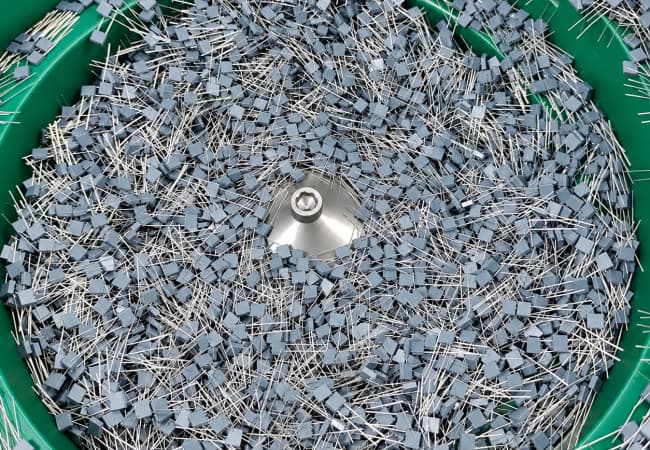
The selection process begins with identifying the application scenario: safety-rated X and Y series capacitors are preferred for power inputs, while surface-mount (SMD) types are suitable for use near signal chips. Next, parameters such as voltage, capacitance, and frequency must be matched; high-voltage industrial applications require models with higher voltage ratings, and high-frequency circuits require specialized high-frequency anti-interference capacitors to avoid poor filtering performance caused by parameter mismatches.
Furthermore, the selected components must comply with national electromagnetic compatibility (EMC) safety standards. High-quality capacitors—characterized by high-temperature and high-voltage resistance, low leakage current, and strong stability—are essential for reliable long-term operation in complex industrial electromagnetic environments. Avoiding inferior, low-cost components is the only way to fundamentally ensure equipment stability and reduce failure and rework rates.

 Scan code 5 seconds